
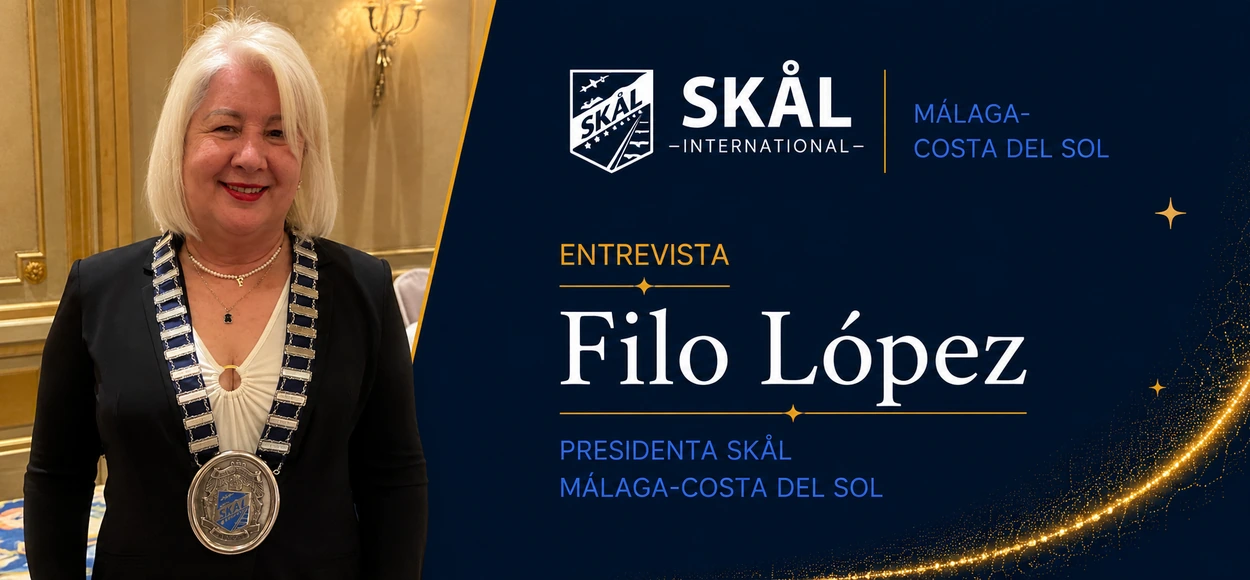
There are career paths that are best understood by tracing the journey taken rather than by listing job titles. Filo López’s began a long way from the executive offices: she arrived in Barcelona from a village in Galicia when she was just 16, keen to work and study, and ended up gaining first-hand experience of practically every corner of a hotel.
His account is interwoven with ideas that recur constantly: training, professionalism, service and people. He talks about learning before leading, about bringing back a smile and courtesy in customer service, and about using professional relationships to connect, share and help.
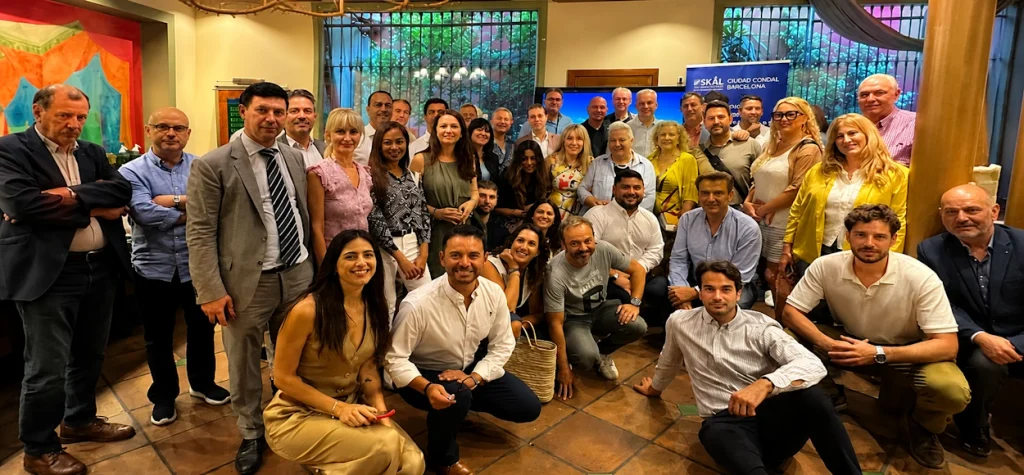
It is this very approach to tourism that underpins his involvement with Skål and the creation of Skål International Ciudad Condal Barcelona, a young club that has experienced rapid growth and aims to enable its members to get to know one another, collaborate and create opportunities amongst themselves.
In «Al frente de Skål», we spoke to Filo López about his career, his approach to the profession, the founding of Ciudad Condal and the projects through which he hopes to contribute to the future of the sector. During the conversation, he made a remark that sums up much of his character and the way he tackles challenges: ‘“No” is not an option’.
The interview
Filo, before we talk about Skål, I’d like to start with you. You came to Barcelona from Galicia when you were just 16. How did your career in tourism begin?
I came from a village in Galicia when I was 16, with a relative, and I was absolutely certain I wanted to work. I started a desk job and immediately thought: «This isn’t for me.» Three months later, a friend told me about a hotel that was looking for staff, so I went along to find out more. I was underage and needed permission, but I’d say: «I’ve got two hands, I can work.» I wanted to work in the mornings so I could study tourism. That’s how it all began.
You’ve said that you started at the bottom and worked your way through practically every department in a hotel. How important has that been in shaping your understanding of the profession?
A great deal. I started out as a cleaner, and if I had to do it all over again, I’d do it again. I worked as a waitress, assistant housekeeper and housekeeper; I even did an internship as a dishwasher, and I worked in the purchasing, laundry and linen departments. I’ve always been the sort of person who likes to know how things should be done. For me, all of that was a learning experience.
Training has been a constant feature of your career. What is it about the sector that still inspires you today?
Training people. Ensuring people are professional, know how to conduct themselves and are keen to learn. I always say that those who know how can go wherever they want; those who don’t, won’t get there. And not everyone is cut out for everything either. My passion remains teaching people.
You took part in the opening of the Hotel Rey Juan Carlos I to mark the Barcelona Olympic Games. What did you take away from that period?
It was a very important period in my life. I ended up there almost by chance, accompanying a friend to a job interview, and at first I hadn’t even planned to apply myself. In the end, they persuaded me. It was a five-star luxury hotel and my curiosity was piqued. I spent nearly fifteen years there. What it taught me most was how to deal with people who were very human, but also very challenging and demanding. If I could work with some of those people again, I would.
You said that in the tourism industry, something as simple as a smile has been lost. What do you feel is missing in the sector today?
Professionalism. These days it seems as though anything goes, and not everyone is cut out for a career in tourism. I always say that a smile is all it takes to win over a customer. These days we have far more resources and speak more languages, but a simple ‘good morning’ or ‘good afternoon’, politeness and a smile will open doors for you. Tourism is a very demanding job, and you have to love it and understand it.
If you had to explain Skål’s philosophy based on your own experience, what values make it different from any other professional association?
In fact, Skål’s philosophy, right from its inception, has been based on very specific human principles that set it apart from any other tourism association or club. Firstly, friendship, respect, equality and dignity – values that inevitably lead to credibility. Secondly, Skål is an international, non-profit association of tourism professionals, whose main objective is to foster human and professional relationships within the sector. And, thirdly, our meetings and events are designed to strengthen bonds of friendship, freely share experiences and challenges within the sector, and create networking opportunities. By sharing these principles with Skål clubs around the world, our initiatives can transcend borders and reach thousands of fellow Skål professionals.
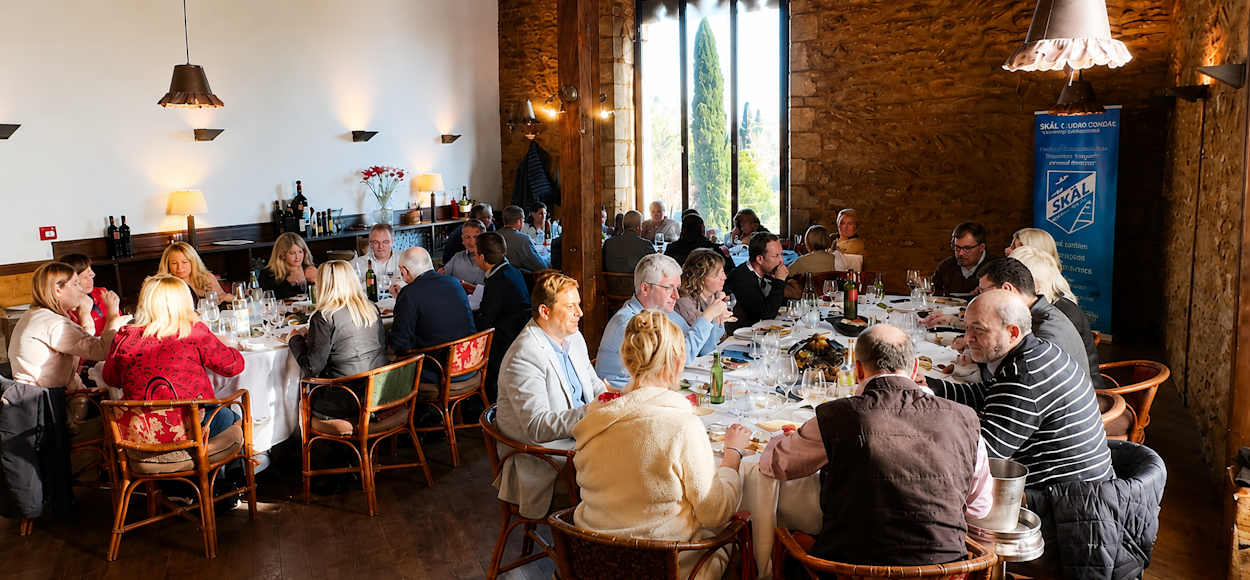
Your story with Skål is also an unusual one. After many years as a Skål member, you initially didn’t want to set up another club in Barcelona. What happened to make you change your mind and get things off the ground? Skål Ciudad Condal Barcelona?
I’d been with Skål for about twelve years and had met loads of people from other clubs. My sponsor suggested I set up a club, but I said no because there was already one in Barcelona. Later, my sponsor, some friends from Málaga and others gradually persuaded me. First I set up the Galicia club, and then the opportunity arose to launch another project. A friend suggested the name Ciudad Condal, which I’d remembered since I was a child, and we set to work. I’m incredibly proud to have founded it.
Barcelona has grown very rapidly. What is the secret behind this?
In our friends, our female friends, our members and, above all, in the team. I always say that Skål belongs to everyone. We have a really good team, and that’s why it works. When people get involved and feel that the club is theirs too, things work out.
One of the club’s initiatives is Red Café. What are you hoping to achieve with these meetings?
Red Café was the brainchild of the team; the name was Ángel Domínguez’s idea. We set it up so that we could get to know one another, find out what each of us does for a living, and see how we could help one another. I always say: ask us for whatever we can give you, tell us what you need. This has led to the formation of groups and projects, including those related to job boards for the hospitality sector. We also organise after-work get-togethers and several large events each year to socialise.
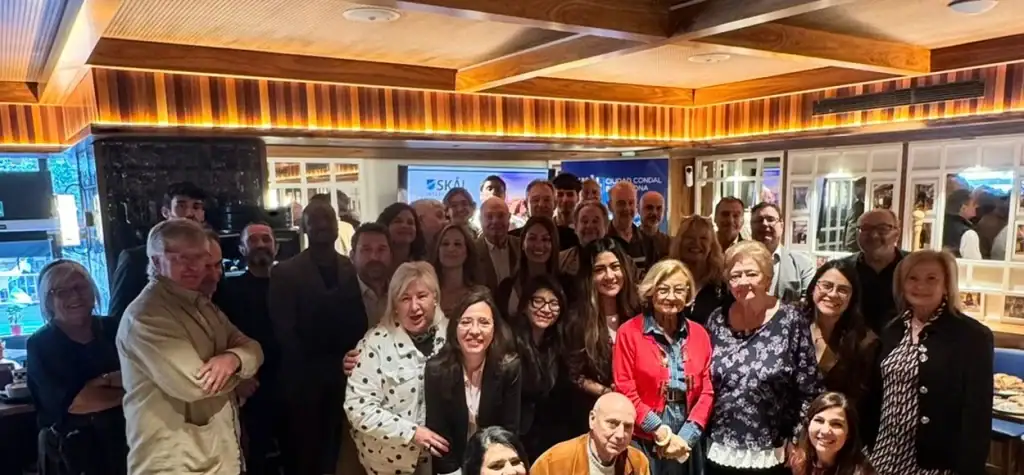
How do you envisage Skål in five years’ time, and what projects would you like to have brought to fruition?
We have some very interesting projects lined up for the next five years, drawn up jointly by our Board of Directors and set out in an ambitious action plan. The realities and challenges facing the world of tourism concern us, but, above all, they are a priority for us. We remain steadfast in our commitment to helping the tourism sector reclaim its core values: humanity, professionalism, the dignity of workers and excellence in customer service. We must regain pride in our profession and once again see ourselves as true hosts.
One of our major projects will be the creation of a «Skål School», aimed at the training and specialisation of professionals in the sector, with programmes that enable each employee to acquire specific knowledge and qualifications in the various departments. At the same time, we will work on setting up a specialised job board, specifically aimed at the hospitality industry, which will facilitate the recruitment of trained professionals and help address one of the sector’s most pressing current needs: finding and retaining talent.
We also want to pay particular attention to young people who are finishing their studies and have plans and aspirations, but need business training, guidance or support to turn their ideas into reality. And, of course, we will continue to increase the number of professional events and networking opportunities, creating new possibilities for collaboration and business for our members, as well as welcoming new members who bring talent, experience and fresh opportunities to our organisation.
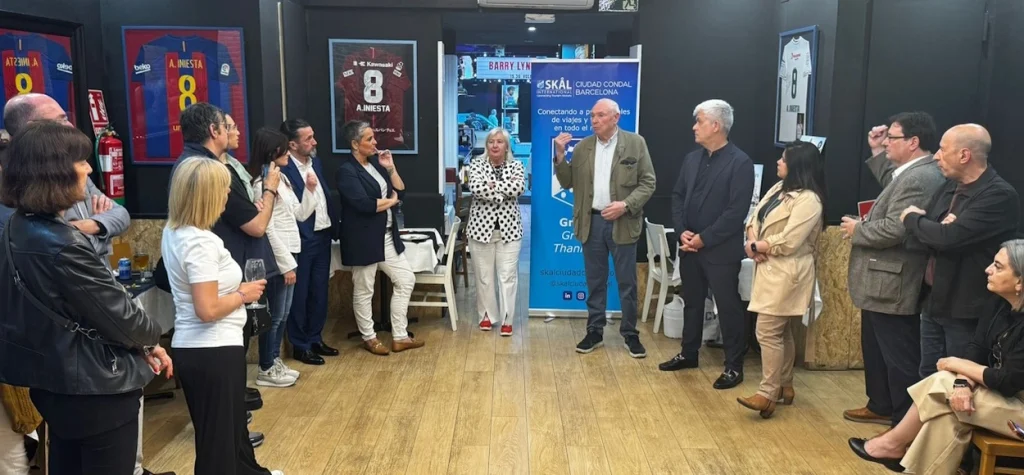
Skål needs to attract younger generations. What should we offer them to make them want to join the organisation?
This is one of the strategic priorities of our project and is already included in our action plan, which has begun to be implemented with very positive results. Young people do not just need good vocational training; they must also understand the true ethos of working in tourism. They must love their profession, understand the sector and learn to turn their ideas into viable projects.
The younger generations must learn to make the most of new technologies, but they must also understand the realistic possibilities for implementing their projects and adapt them to genuine business needs. To do this, they need support, guidance and a period of mentoring. And this is where Skål can play a key role: by supporting, training and putting young people in touch with professionals and businesses that can help them turn their projects into real opportunities.
And what is your view of the Skål clubs in Spain? Is it possible to move towards greater collaboration between them?
Not all Skål clubs have standardised projects. Although we share the same principles and a common philosophy, each club has its own characteristics, internal structures and circumstances, which are also determined by the number of members and the specific features of its local environment. However, there is one thing that unites us: the desire to work together.
Skål clubs, both in Spain and around the world, are open to supporting joint initiatives and projects put forward by other clubs. Furthermore, our meetings and assemblies enable us to share concerns and analyse the main problems and challenges currently facing the tourism sector worldwide.
You talk a lot about helping and bringing people together. Is that also how you see your life outside Skål?
Yes. I’m a very restless person. I like socialising with people and helping them. If I meet someone who can connect with another person and be of help to them, that means the world to me. I also like coming home to spend time with my family and my dog, although I must admit I find it really hard to sit still.
Barcelona is a major tourist destination. How do you view the sector at present, and what role can Skål play?
Tourism is now on a massive scale, and we need to take much greater care of it. We depend on tourism for our livelihood and we need to get it right. That’s where professionalism comes into it for me. Skål can do a great many things, particularly by helping to professionalise the sector. That would be one of my greatest hopes: that we can contribute, even if only in small ways, to what tourism needs from us.
Your motto is «No doesn’t exist». What does that really mean to Filo López?
I fully identify with that idea. I try to convey it and instil it in everyone who works in the tourism sector, as well as in those who dream of becoming part of it in the future. When faced with a request, whether from a manager or a customer, I believe the initial response should always be positive and focused on finding a solution.
Then come the difficulties: these may be financial, time-related, resource-related, or dependent on third parties. But there is almost always an alternative. That is why ideas, resources, experience and knowledge are so important.
And looking to the future, what is your greatest hope for Skål?
My greatest ambition is to help raise Skål to an even higher level: a respected, useful and educational organisation with an excellent reputation and solid professional credibility. I want Skål to be recognised not only as a meeting place for tourism professionals, but also as an organisation capable of providing knowledge, training, opportunities and solutions for the future of our industry.
And, of course, I cannot forget my own private businesses either, to which I will have to devote more and more time. But I am convinced that both responsibilities can coexist when one fundamental thing is present: commitment, enthusiasm and passion for what one does.
To finish off, here’s a question: if you had to define Skål in a single sentence, what would it be?
«Skål is a large international family where friendship builds trust and trust creates opportunities in the world of tourism.”